
Disclaimer: This article is for educational purposes only. Always consult with a qualified healthcare provider before making changes to your diet or health routine.
Introduction: The Gut Health Revolution Nobody Talks About
You know that uncomfortable bloated feeling after lunch? Or maybe you struggle with irregular digestion and never quite figured out why? You are not alone. Millions of people deal with these issues daily, but here is the thing—most of us never stop to think about what is actually happening in our gut.
I get it. Talking about digestion is not sexy or glamorous. But here is what is wild: your gut health affects everything. Your energy levels, your mood, your immune system, even your skin. Scientists have been discovering connections between gut bacteria and brain health that sound straight out of science fiction.
The good news? You do not need expensive supplements or complicated protocols. Small, intentional changes to what you eat and how you live can genuinely transform how your body feels.
Let me walk you through this.
What Exactly Is Gut Health? (And Why Should You Care?)
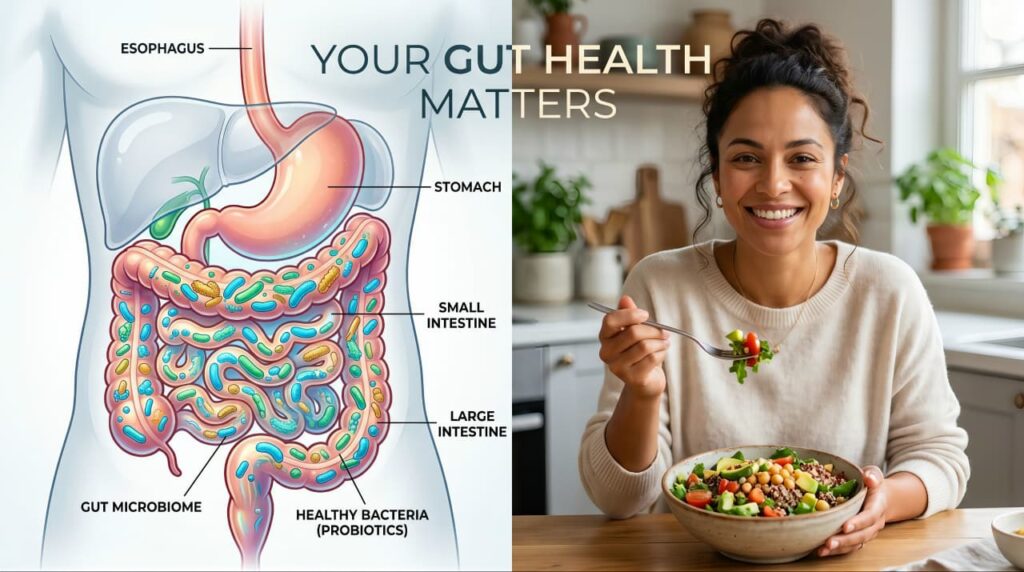
Your gut is not just your stomach. It is an entire ecosystem—your gastrointestinal tract, which runs from your mouth all the way down. But more importantly, it is home to trillions of bacteria. Yes, trillions. And these are not the bad guys trying to make you sick. They are actually essential to keeping you healthy.
This bacterial community is called your microbiome, and it is like having an entire army of microscopic workers running operations in your body. These bacteria help you:
- Digest food properly
- Absorb nutrients
- Produce vitamins
- Fight off bad bacteria
- Regulate your immune system
- Influence your mood
When your microbiome is balanced and healthy, you notice it. You have stable energy. Your digestion works like clockwork. You feel mentally sharp. But when it is out of balance? That is when things go sideways.
The Problem: How Modern Life Messes With Your Gut Health
Here is where it gets real. Most of us have been unknowingly sabotaging our gut health for years.
Antibiotics are the biggest culprit. Do not get me wrong—antibiotics literally saved humanity. But here is the problem: antibiotics do not distinguish between bad bacteria and good bacteria in your gut. So every time you take antibiotics, you are essentially nuking your entire microbiome.
One course of antibiotics can take months for your gut bacteria to fully recover from.
Then there is what we actually eat. The modern diet is basically a gut-health nightmare:
- Ultra-processed foods are void of real fiber
- Sugar and artificial sweeteners feed bad bacteria
- Refined carbohydrates spike blood sugar and cause inflammation
- Not enough vegetables means your good bacteria are starving
- Unhealthy oils cause inflammation in your gut lining
The result? Dysbiosis—an imbalance where bad bacteria outnumber good ones. And that is when problems start: bloating, irregular digestion, low energy, brain fog, even mood issues.
The Practical Fix: 4 Real Changes That Actually Work
Okay, so your gut needs help. The good news is that your microbiome is incredibly responsive. Feed it right, and it bounces back faster than you would expect. Here is what actually works:
1. Eat More Fiber (But Do It Slowly)
I know you have heard this a thousand times, but here is why it matters: fiber is basically food for your good bacteria.
But here is the catch—if you have been eating a low-fiber diet and suddenly jump to 40 grams of fiber daily, you will feel bloated and gassy. Your bacteria need time to adjust.
Instead, do this:
- Start where you are. If you eat almost no vegetables, that is your baseline.
- Add gradually. Add one new high-fiber food every 3-4 days.
- Focus on variety. Different fibers feed different bacteria.
- Include both soluble and insoluble fiber.
Practical daily targets: 25-30 grams of fiber if you are just starting out, work up to 35+ grams as your gut adapts, spread it throughout the day.
2. Add Fermented Foods (The Living Kind)
Here is what most people get wrong about fermented foods: they are not medicine. But they do something valuable—they add living bacteria (probiotics) to your system.
- Sauerkraut (unpasteurized)
- Kimchi (Korean fermented vegetables)
- Miso (fermented soybean paste)
- Tempeh (fermented soybeans)
- Plain Greek yogurt
- Kefir (fermented milk drink)
- Kombucha (fermented tea)
Real talk: You do not need to eat these in massive quantities. A small spoonful with a meal is fine. Start with just a tablespoon alongside one meal daily.
3. Reduce the Big 3 Gut Disruptors
Ultra-processed foods: These are engineered to be shelf-stable but basically void of the fiber and nutrients your gut bacteria need.
Excess sugar: Not just candy and soda. This includes flavored yogurts, granola, and store-bought smoothies. One simple rule: check labels.
Too much alcohol: Alcohol damages your gut lining and kills off good bacteria. You do not need to quit, but if you are drinking daily, that is something to address.
4. Actually Manage Your Stress (Yes, This Matters)
Your gut and brain are literally connected via the vagus nerve. When you are stressed, your gut suffers. It is a loop.
- Reduces stomach acid
- Increases gut permeability
- Kills off good bacteria
- Triggers the fight or flight response
You do not need to become a meditation guru. But incorporating even 10 minutes of something calming daily helps: a short walk, breathing exercises, yoga, journaling, or time in nature.
What Results Actually Look Like
Week 1-2: Your bacteria are adjusting. Drink more water and stick with it.
Week 3-4: Your digestion becomes more regular. You have more stable energy.
Week 6-8: You notice real changes. Less bloating, more consistent energy, better mood.
3-6 months: Your gut is genuinely rebalanced. You feel noticeably better.
You cannot do it for a month and then go back to your old habits. Your gut bacteria reflect what you feed them. Consistency matters way more than perfection.
The Bottom Line
Your gut health is not some trendy wellness obsession. It is literally foundational to how you feel daily. You do not need complicated protocols or expensive supplements. You just need to:
- Eat more fiber (add slowly)
- Include fermented foods (small amounts, regularly)
- Reduce processed foods and excess sugar
- Actually manage stress
- Drink enough water
- Get decent sleep
Start with one change. Master it. Then add another. Your gut has been working overtime. Give it a break, feed it right, and it will reward you with energy, better digestion, better mood, and better overall health. Your gut health matters. Your body will thank you.
Frequently Asked Questions
Q: Do I need to take a probiotic supplement?
A: Probiotics can help, but they are not magic. Food-based probiotics from fermented foods are often more effective.
Q: How much water should I drink?
A: A simple rule: half your body weight in ounces daily. So if you weigh 160 pounds, aim for 80 ounces.
Q: Can I fix my gut after antibiotics?
A: Absolutely. Your microbiome is remarkably resilient. It can take 6-12 months to fully recover.
Q: What if I have IBS?
A: Work with a gastroenterologist or registered dietitian who specializes in gut health.
Q: Do all these foods work for everyone?
A: No. Gut health is individual. Pay attention to how your body responds and adjust.
Q: How do I know if my gut is healthier?
A: You will feel it. More consistent energy, better digestion, less bloating, better mood.